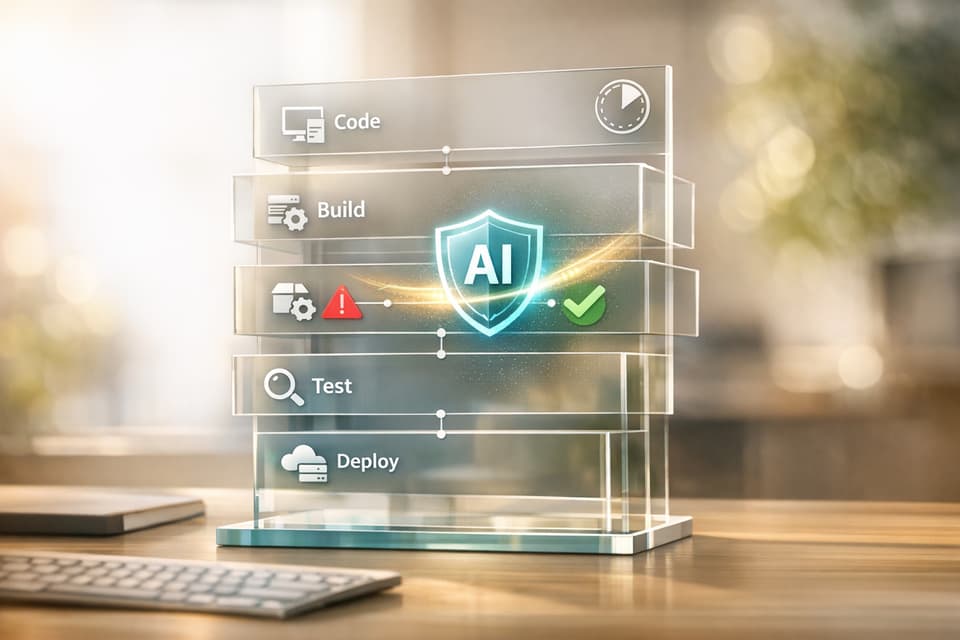
AI Tools for IaC Vulnerability Detection
AI tools detect and auto-remediate IaC misconfigurations in real time, integrate with CI/CD, and cut remediation from months to minutes.
Security library
Automate Security field notes and practical articles for teams building validation, remediation, resilience, and evidence workflows.
Use AI in CI/CD to automate penetration testing—faster scans, fewer false positives, continuous monitoring, and prioritized fixes.
AI-driven cloud security tools for 2026 that automate threat detection, enforce compliance, and cut incident resolution times and costs.
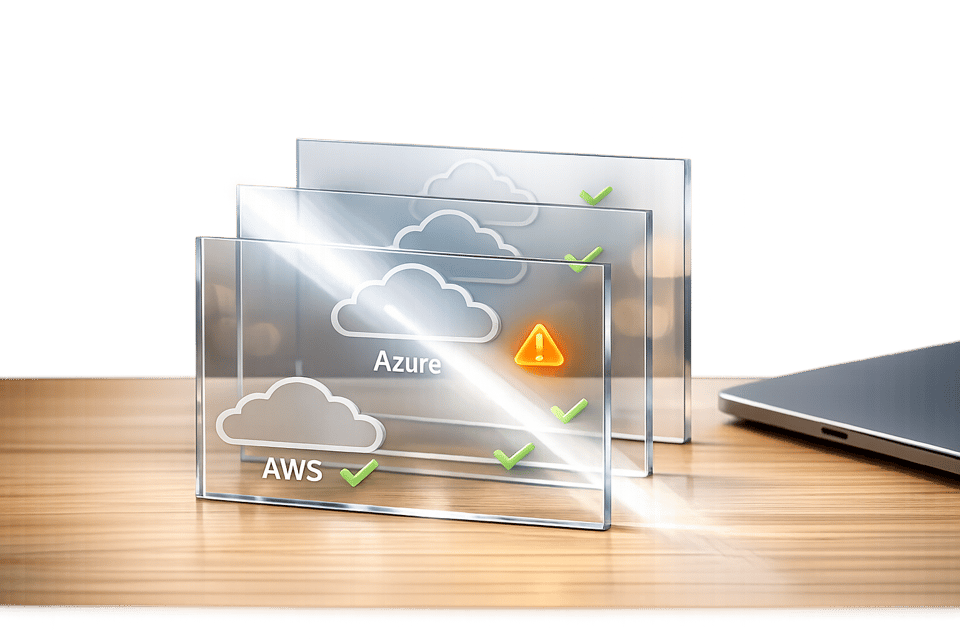
CSPM automates discovery, prioritization, and remediation of cloud misconfigurations across AWS, Azure, and GCP to improve security and compliance.
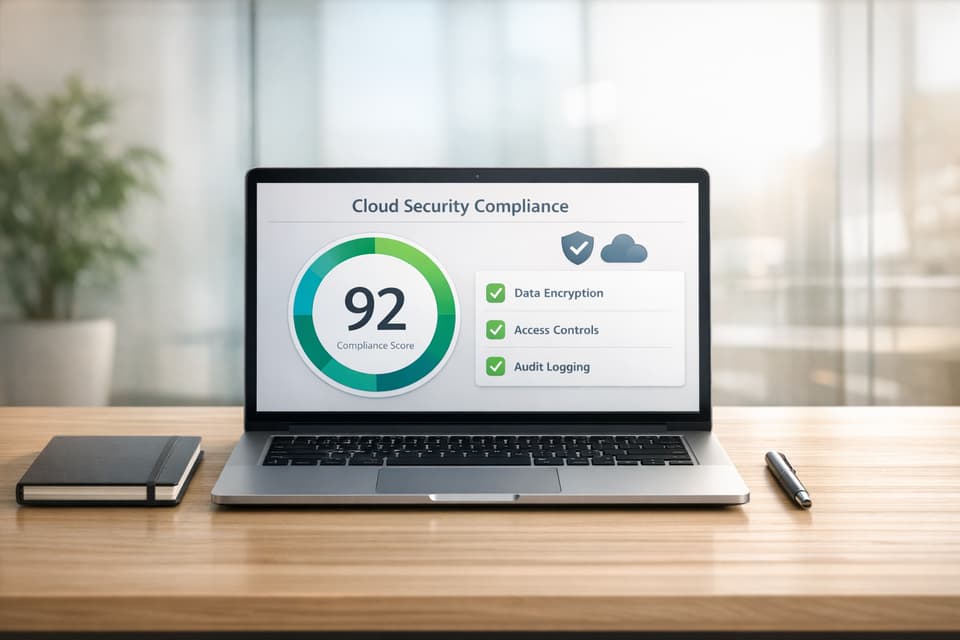
Check if your cloud setup meets security standards with our free tool. Get a compliance score and actionable tips to protect your data now!
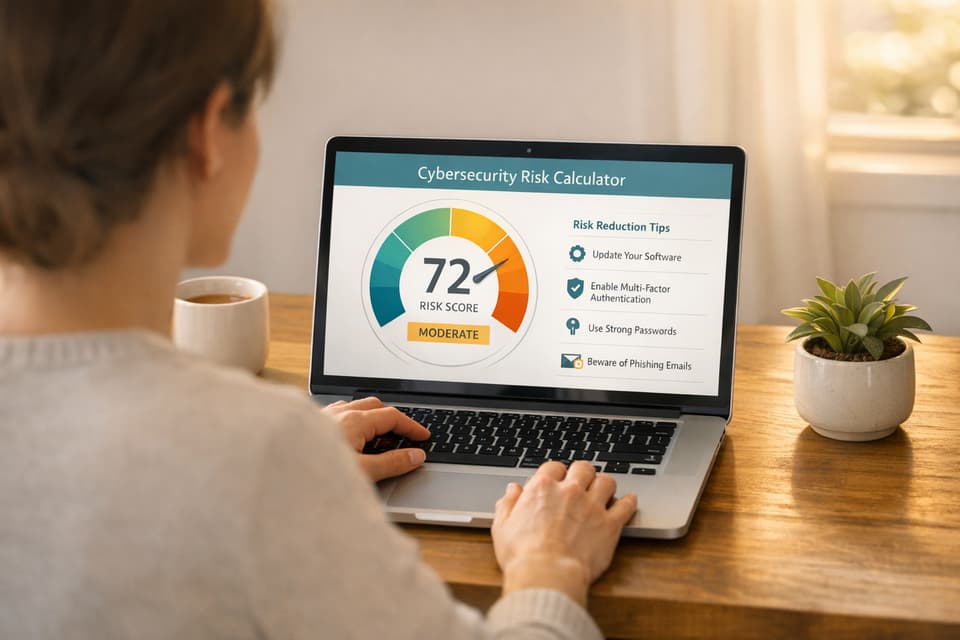
Worried about cyber threats? Use our free Cybersecurity Risk Calculator to get your risk score and tailored tips to protect your business or home!
Compare static (long-lived) and dynamic (on-demand) secrets—security, management, and best use cases for cloud and legacy systems.
How AI is moving penetration testing from periodic reports toward continuous validation, remediation, and proof.
A practical guide to applying zero trust controls without turning every workflow into a security bottleneck.
A case study on using Sentinel and Surge to validate risk, guide fixes, and prove progress across microservices.
How to add security validation to CI/CD without creating alert queues engineers stop trusting.
AI enforces DevOps security baselines with continuous monitoring, automated remediation, faster MTTR, and ongoing cloud compliance for IaC and pipelines.
Sentinel v3.0 improves crawling, prioritization, and exploit-to-fix workflows for application security teams.
How AI learns cloud baselines and uses models to detect credential abuse, data exfiltration, lateral movement, and other anomalous cloud activity.
How automated Policy-as-Code updates reduce compliance gaps, speed CI/CD, and prevent permission creep in fast-changing cloud environments.
AI threat intelligence boosts cloud security with real‑time detection, fewer false positives, automated remediation, and scalable multicloud/Kubernetes...
How to turn cloud posture signals into ownership, remediation, and evidence across multi-cloud environments.
How Policy-Based Access Control enables dynamic, least-privilege access in Zero Trust using policy-as-code, JIT permissions, and real-time context.
Automate MFA across cloud environments to enforce consistent policies, enable risk-based adaptive authentication, and streamline CLI/CI/CD workflows.
How to replace manual SOC 2 evidence assembly with proof captured from real security workflows.
How to model traffic, test critical paths, find bottlenecks, and retest hardening work with Surge.
A case study on using Resolve and Beacon to monitor controls and preserve proof across multiple facilities.
Where traditional threat modeling misses AI risk and how to adapt your workflow for model, data, and prompt surfaces.
A practical API security guide for auth, authorization, injection, rate limits, and proof of remediation.
How to reduce ransomware exposure with validated controls, faster detection paths, and clearer response evidence.
A practical framework for giving engineering teams security ownership without adding ceremony.
AI-driven remediation playbooks automate cloud fixes, cut remediation time and errors, and lower breach costs while scaling SOC operations.
Step-by-step Zero Trust plan: inventory assets, enforce strong identity and MFA, segment networks, deploy DLP and detection, automate policies, and roll...
Compare container and VM security: containers are lightweight and immutable but share the host kernel; VMs provide stronger isolation but need more...
Practical cloud security guidance for engineers: IAM, encryption, shared responsibility, CI/CD and serverless hardening, multi-cloud monitoring.
A business case for security automation that starts with measurable workflows, risk reduction, and phased rollout.
How JavaScript and TypeScript teams can spot risky dependencies, validate exposure, and prove remediation.
AI-driven prioritization, automated triage, and contextual enrichment cut false positives and investigation time so SOCs can focus on real threats.
Practical SOC 2 guidance for cloud and SaaS teams: scope, Trust Services Criteria, cloud controls, evidence automation, and audit preparation.
Seven AI-driven practices that accelerate cloud incident response—real-time detection, automated triage, root-cause analysis, predictive analytics, and...
Automated detection and remediation turn cloud environments into self-healing defenses that cut incident response time.
Twelve practical DevSecOps steps to secure cloud environments: policies, least-privilege access, CI/CD testing, image scans, SBOMs, monitoring, and...